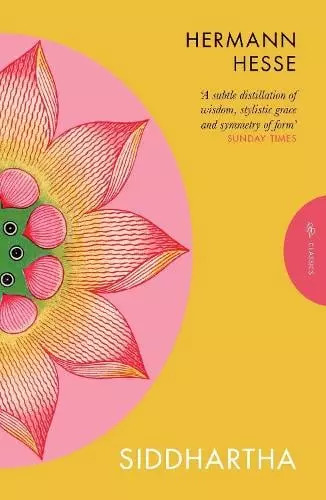
Siddhartha
Reflection: This is my third Hermann Hesse book. It follows a young protagonist called Siddhartha on his spiritual journey toward enlightenment.
The book starts with Siddhartha rejecting the religious traditions he was born into (his "Self"), believing that true wisdom cannot be taught but must be lived. He believes it must be personally experienced and that one must find their own path rather than follow anyone else's.
He sets out to destroy and reinvent this "Self" and find his own path. He first encounters the Samanas, wandering ascetics who believe that extreme self-denial and physical deprivation (fasting, pain, and meditation) can free the spirit from the ego and lead to liberation. Siddhartha eventually comes to reject this when he realizes that temporarily losing the self through asceticism is no different from a drunk numbing himself with wine. Both escape the self briefly but always return to it, achieving nothing permanent.
He leaves the Samanas and meets Gotama (Buddha), whose teachings he deeply respects. Yet Siddhartha declines to become his follower, arguing that enlightenment is not transferable through doctrine. Buddha had found his own path, and so must he.
He then lives as a successful merchant and merts Kamala. He experiences wealth and sensual pleasure but grows spiritually empty and nearly suicidal.
Finally, he abandons this life and becomes a simple ferryman, learning from the river and his fellow ferryman Vasudeva. The river teaches him that all things flow together as one, and he finally reaches enlightenment.
The novel is rather dense, and especially toward the end it became a little hard to follow. A few points stood out to me:
- Siddhartha's entire life is a restless journey through different philosophies, pleasures, and ways of being. The seeking itself is almost the point.
- Knowledge can be communicated, but wisdom must be lived. This is why Siddhartha must make all his own mistakes rather than follow a prescribed path.
- Pleasure and pain are not opposites but part of the same whole. Siddhartha's time as a wealthy merchant isn't a detour; it's necessary.
Overall a very good book that showed me a few new perspectives.