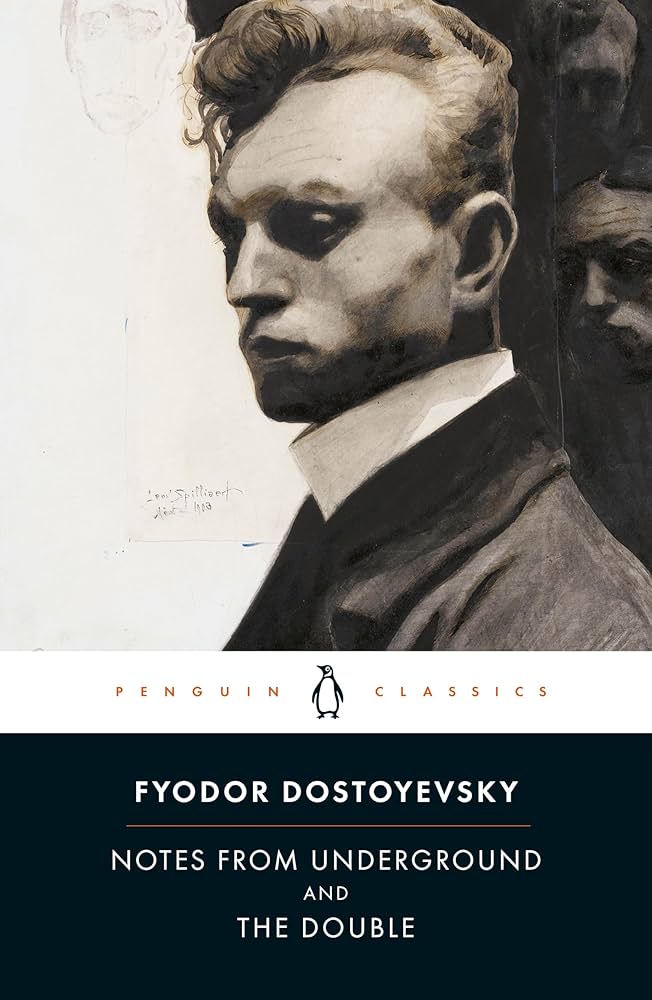
Notes from Underground
Reflection: This is Dostoevsky's attack on the optimistic rationalism of his time (1800s Russia), specifically the idea that if society was properly arranged, people would naturally do good. His argument: humans are not rational. We choose suffering and spite just to prove we are free. You cannot build a perfect system for a creature that breaks systems on purpose.
The Underground Man illustrates this rather well. He crashes a dinner with schoolmates who never liked him, insults everyone, and cannot leave because leaving means admitting defeat.
Many see this as the birth of existentialism, the idea that life has no inherent meaning and that individuals must define themselves through their choices and actions. Reading it, I also found a strong link to Camus and absurdism.
The Underground Man lives in a world that offers no meaning, and rather than accepting that, he rages against it in ways that are self-defeating and irrational. That tension between humans desperately seeking meaning in a universe that provides none runs through the whole book.
Overall, while the rationalist movement is arguably not that strong in today's society, I still consider the message solid. Good read.