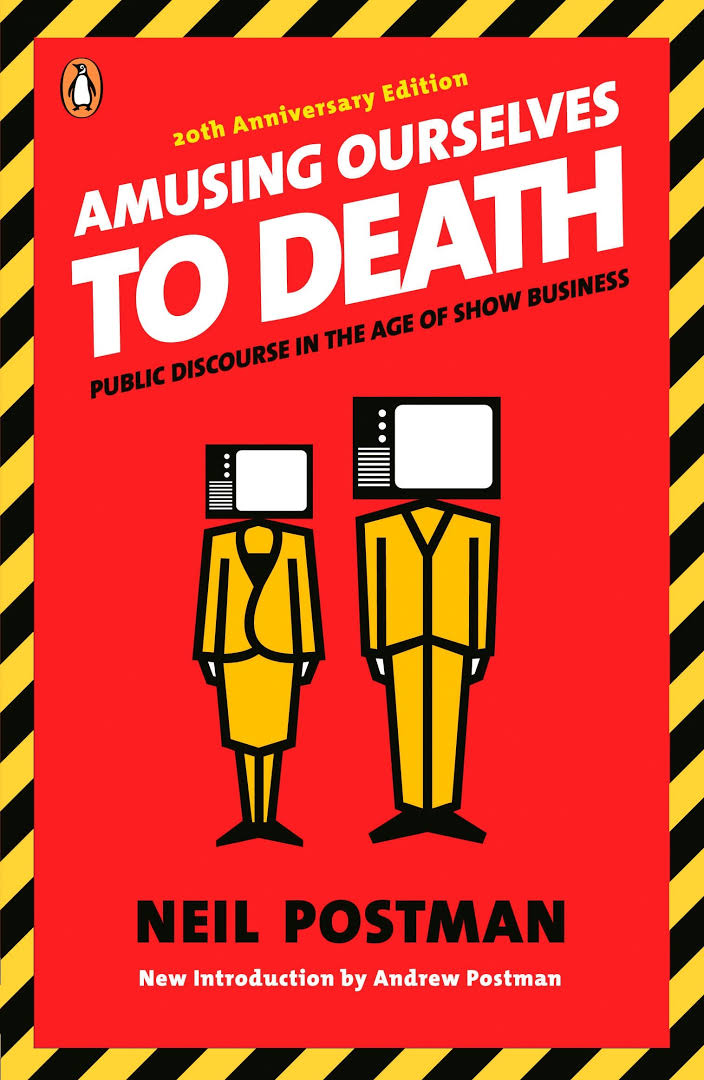
Amusing Ourselves to Death
Reflection: In the first chapters, the author starts off by noting that the medium of communication strongly shapes the culture that grows around it. Each type of communication has its own strengths and limitations, which influence how ideas are expressed and understood.
For example, cultures that rely primarily on oral communication tend to preserve wisdom through aphorisms, proverbs, and memorable sayings. By contrast, cultures shaped by writing place greater value on logic, coherence, and sustained argument, since written texts encourage the careful development and preservation of complex ideas.
Later, when print became widespread, it created an even deeper culture of analysis and debate, as books and newspapers encouraged individuals to engage with lengthy, structured arguments rather than brief, memorable phrases.
The move from oral speech to writing was a large change. Once ideas could be written down, people could go back to them, analyze them, and question them. This encouraged more serious and rational forms of thought, especially in areas like law, philosophy, and science.
But later inventions started to break this pattern. With the arrival of the telegraph (and radio) fast messages were sent across long distances, but it delivered only fragments of information. News became a stream of disconnected facts, most of which had little relevance to people’s lives.
Television took this even further. Instead of arguments and reasoning, television made everything about pictures, entertainment, and performance. Politics, religion, and even education had to fit the style of show business, where being flashy or emotional mattered more than being true or logical.
This is where Postman compares Orwell and Huxley. Orwell feared a world where truth would be hidden by authority, and Huxley feared a world where truth would be drowned in distraction and amusement. Postman argues Huxley was right.
In fact, the real problem in my opinion is that the signal is drowned out by the noise. We are flooded with endless bits of information, most stripped of context, making it harder to form clear judgments or make informed decisions.
Ending this review, unlike the author, I don't necessarily believe that people have lost the ability to tell the difference between entertainment and serious information just yet. Many can still recognize when an article or book is more substantial than a short clip. The problem, though, is the willingness to engage with that kind of material is fading.